Flock Social
Designing a post-event interaction feature
During this project, I led the interface and interaction design for attendee's experience on the proposed feature. Furthermore, I contributed to the UX research process including interviewing, analyzing user insights, developing user personas, journey map and initial design concepts.

Timeline
4 months
(Sep-Dec 2025)
Role
UX Design & Research
Team
Victoria Xi,
Clara Xu,
Justine Abucay
Tools
Figma, FigJam
INTRODUCTION
About the client
Flock Social is a social event app turning Metro Vancouver into networks of welcoming communities. Flock helps people discover niche clubs and events, meet future friends in real life, and grow communities beyond a single event.
Who are we designing for?
Attendees
First-time or infrequent Flock attendees who join events to find meaningful and long-lasting connections.
Event hosts
Who want to host meaningful events and build a community where people feel connected and can actively engage.
Process

PROBLEM
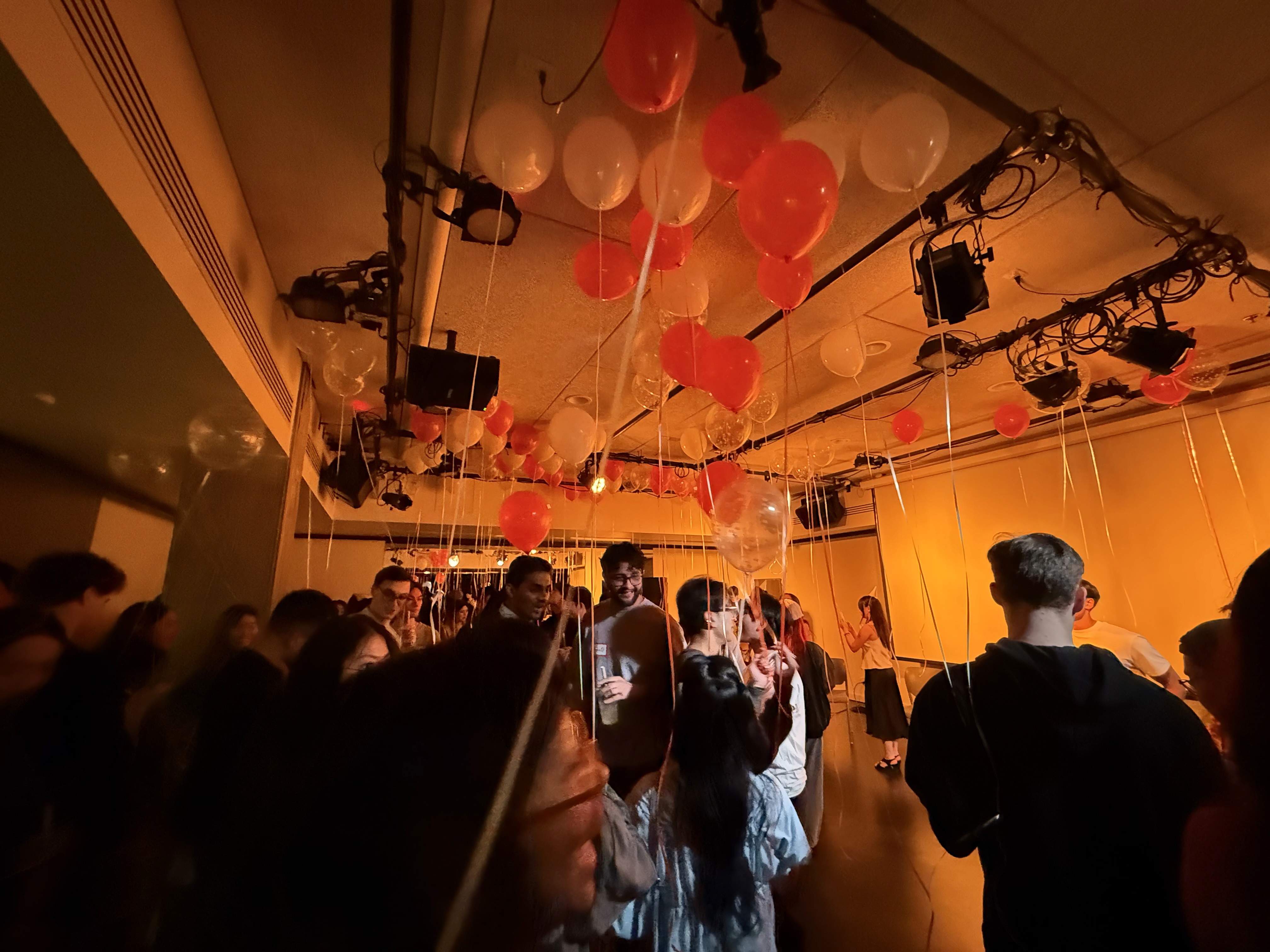
Post-event connections were happening, but not inside Flock.
After interviewing with the Flock team and 5+ Flock users, I found that both event hosts and attendees didn't have a way to continue their initial connections through directly Flock app. Additionally, Flock hosts didn't have a virtual pathway to build on attendee retention by personalized, inclusive and welcoming communication that may prompt attendees to return to their community or future events.
Pain Point #1
Attendees struggled to stay connected with people they first met at the event, because photo sharing, chats and follow-ups happened in external platforms.
Pain Point #2
Hosts couldn't easily see or support connections with attendees after events, since most interaction happens off-platform.
How might we make the post-event experience feel more personal and low-pressure so that attendees are encouraged to connect through Flock and hosts can contribute building community beyond a single event?
OPPORTUNITY
SOLUTION
Thank-you Postcards transforms follow-ups into a delightful digital postcard moment that brings users back to the app and strengthens community ties.
This concept creates a post-event interaction space on the app where hosts and attendees can re-encounter each other virtually. The feature is aimed for fostering fellowship, whether that is from attendee-to-attendee or host-to-attendee, so that the app can enhance its social potential after events.
I led the design and prototype for this user flow on Figma
First Prompt: Attendee Receiving Postcard
This section shows the attendee's side of the post-event experience, from receiving a notification from the app to opening the postcard bundle sent by the host. This turns the post-event period into a single, cohesive and playful touchpoint rather than scattered messages across external platforms.
Card 1: Thank-you Message
The first card is a warm thank-you message from the host, framed like a personal postcard. Its role is to make attendees feel seen and appreciated.
Card 2: Share Photos
This card encourages event attendees to upload their favourite photos from the event onto the Flock app. With this card, all uploaded photos are accessible and available for attendees to peruse as they wish.
Card 3: Early RSVP for Next Event
This card serves as an invitation for attendees to attend the community’s next upcoming event. By prompting users to RSVP early, attendees may have a higher chance of signing up successfully before the event is full
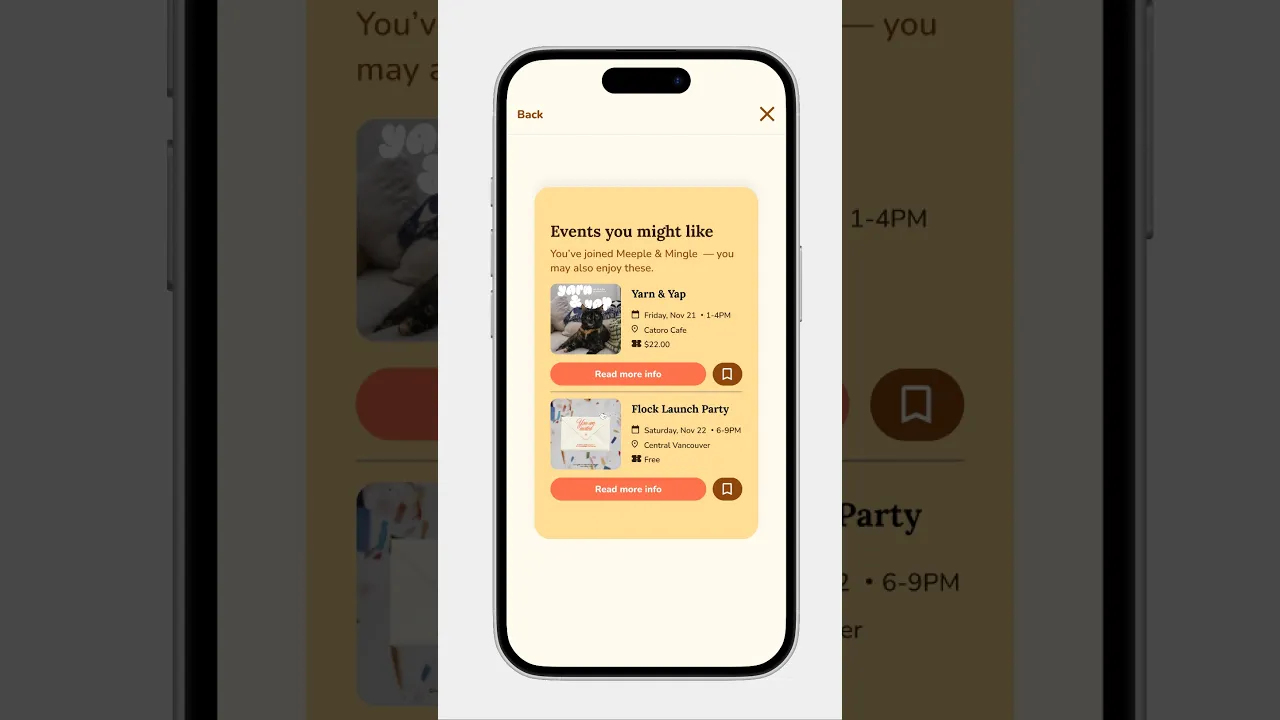
Card 4: Event Recommendations
This card suggests some similar events to the user. Events are selected based on tags and/or communities in-common with the event that the postcard was sent out for. This allows attendees to explore other events that they may find interesting.
Final Deliverable: A Video Pitch
Our team created this video pitch to showcase our post-event connection feature. I played the role of an event attendee, helping illustrate how the feature encourages people to stay connected after an event
REFLECTION
From designing based on my perspective to designing based on evidence and user empathy
One of my biggest takeaways from this project was learning how a structured UX research process can uncover opportunities that I would not have identified on my own. Since I don't regularly attend local social events, I initially lacked firsthand experience with the challenges people face when trying to build lasting connections after an event. Rather than relying on assumptions, I learned to let research guide the design.
This project reinforced that good UX design is not about having all the answers or being the target user yourself. It's about listening, observing, and synthesizing insights from multiple perspectives to define the right problem before designing a solution. I learned that combining qualitative research with collaborative ideation leads to concepts that are grounded in real user needs rather than personal assumptions.
